
Joint comfort basics
The basics of everyday joint comfort

This page is for anyone who wants to understand joint comfort before buying anything. We cover how movement, rest, weight and daily routine shape how the body feels, and where a capsule habit fits in. No jargon, no promises.
Read it as a plain picture of the day, so you can judge what's realistic for you. It takes about eight minutes, and it works as a reference you can come back to.
Today's register
A short walk after breakfast, stairs when they're there. Small and frequent beats large and rare.
20–30 minMost repair happens while you sleep. A heavier day usually wants a lighter one after it.
7–9 hrsOne with a meal you already eat, so it slots into a habit rather than fighting it.
1–2 dailyWhat comfort means day to day
Comfort is how ordinary activity feels
Not a score, not a benchmark. It is how the knees, hips and hands behave while you get up, walk to the shop, carry bags or work in the garden.
Comfort shifts with how much you have moved, how you slept, and how long you have been still. Nobody feels the same every day, and that variation is normal. Understanding it stops you from reading too much into a single good or bad morning.
It also stops the opposite mistake: assuming that a stiff start means something has gone wrong permanently. Most of what you notice day to day is the register of the last twenty-four hours, not a verdict on the next twenty years.
A long walk, a carried load or a late night usually shows up the following morning.
An hour at a desk or in a car makes the first few steps feel heavier than they should.
A poor night tends to make everything read a shade stiffer, even when nothing else changed.
Movement is the main lever
Joints like regular, moderate use. Long periods of sitting let things stiffen, then the first movements feel harder than they should. A walk, some stair climbing, or a gentle stretch breaks that cycle.
You do not need a gym membership or a heavy programme. The useful dose is small and frequent rather than large and rare, which is why a daily habit beats a weekend effort. Think of it as keeping the register current rather than banking one big entry.

Why the daily version wins
A useful dose is short, often, and boring
Three ten-minute walks through a week do more for easy motion than one long session on a Saturday. Stair climbing, carrying shopping, a slow stretch before bed: they all count, and they all take less time than you think.
This is also why a daily capsule habit fits a movement routine more naturally than a sporadic one. Both work on the same principle — repeat the small thing until it stops being a decision.
Rest and recovery count too
Sleep is when the body does most of its repair work, and poor sleep tends to make everything feel stiffer the next day. Rest days aren't laziness; they're part of the routine. If you've had a heavier day, a lighter one after it helps more than pushing through.
A normal week, drawn as cells
Filled cells are days with movement. Empty cells are rest, which is what makes the filled ones possible. The pattern to aim for is dull: repeatable on a bad week, not just a good one.
Sleep is the other half of the work
If you only track what you do in daylight, you miss the half of the routine that happens under the duvet. A regular bedtime does more for how the morning feels than most changes you could buy.
The lighter day after the heavy one
A game of tennis, a long hill or a serious gardening session often wants a calmer day behind it. That isn't a setback. It's the routine absorbing the load deliberately, instead of asking you to pay for it later.
Where weight fits in
Carrying more body weight puts more load through knees and hips with every step, and even modest changes over time reduce that load. This isn't about dramatic targets. It's about the everyday version: smaller portions, more walking, fewer long sits.
Steady and slow is the approach that tends to hold, and it works alongside whatever else you're doing. A drop of a few kilos across a year is not a headline, but it is real load off the knee each time you climb a flight of stairs.
What a daily capsule habit adds
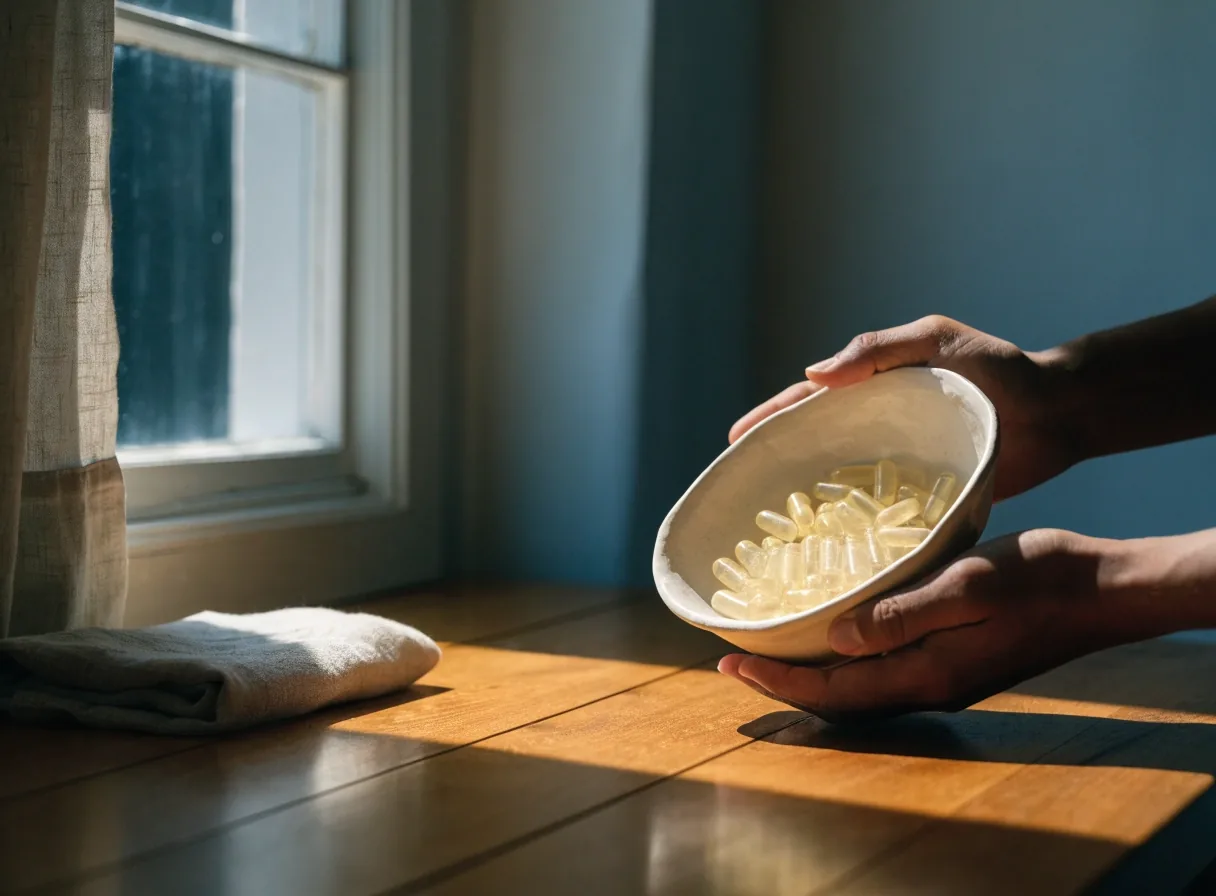
A joint support capsule is a small, consistent input rather than a dramatic one. It's designed to be taken once or twice a day with a meal, so it slots into something you already do.
What it can realistically add is a steady supply of ingredients such as glucosamine, chondroitin, MSM or turmeric while you work on the movement and rest side. It doesn't replace those. It sits alongside them, in the same way a daily walk sits alongside a good night's sleep.
See which ingredients do whatRecognising stiffness versus discomfort
Stiffness is that heavy, slow-start feeling after sitting, and it usually eases once you get going. Discomfort is more persistent and may show up during activity rather than after stillness. The two need different responses: stiffness wants movement, discomfort often wants pacing and a check-in with a qualified professional.
Knowing which you're dealing with changes what you do next. If you can't tell, keep a short note for a week. Patterns beat single days, and a week of notes gives you something useful to describe at any appointment.
Set a baseline first
Note a normal week before you change anything
Which days were easier, what you did the day before, how you slept. That's your reference point.
Without it, you can't tell whether a new routine is helping or whether you just had a good week. It takes two minutes a day and makes every later decision clearer.
Small changes that hold
Pick two things and do them consistently: a short daily walk and a capsule with breakfast, for example. Add a stretch if it's easy. Resist the urge to overhaul everything at once, because routines that demand a lot collapse quickly.
The changes that survive are the ones small enough to continue on a bad day. If your new routine only works when the week is going well, it isn't the routine's fault. It's just too big.
A ten-minute walk at a fixed point in the day, so it becomes a cue rather than a chore.
DailyOne capsule with the meal you never skip. Breakfast is the usual place to anchor a new habit.
With foodTwo minutes in the evening, one line for the day. Enough to compare weeks without extra effort.
2 minHow a support routine compares, row by row
Everything above sits on the same register. What changes is the weight each entry carries: movement does the heavy lifting, rest decides how the morning reads, and a daily capsule is a small consistent addition. That order is what keeps expectations honest.
The main lever. Daily, moderate use keeps the register warm; long sits let it cool and then the first steps feel heavier. A short walk, stairs, a stretch before bed.
Decides how the next morning reads. Lighter day after a heavy one.
Modest, steady changes take load off every step. No dramatic targets.
A steady supply of ingredients, alongside the rest.
Questions this page usually raises
Straight answers, no promises. If you are weighing up natural joint care as part of a routine, these are the things worth settling before you spend anything.
How long before a daily routine feels different?
Weeks rather than days for most people. That is why the baseline note matters: without it, a good week can look like a result and a bad one can look like failure. Judge a routine over a month, not a weekend.
Can a capsule replace movement and rest?
No. It sits alongside them. Its job is a steady supply of ingredients you would otherwise get unevenly from food, taken at a consistent time so it becomes part of the day rather than an event.
What should I look at on the label?
The ingredients and the amounts, the format, and how many capsules a day the label expects. Compare like with like: two products with the same ingredient can differ in how much you take each day, and that changes the maths on the shelf.
When should I speak to a professional instead?
If what you feel is persistent rather than stiff-in-the-morning, or if it is getting worse over weeks, that is a conversation for a qualified professional. This page is background reading, not a substitute for one. Anything you take on top of that is a decision to make with them.
Is this page selling me something?
No. It explains how the everyday side of comfort works, so you can decide for yourself what a capsule habit adds. When you are ready, the ingredient guide and the comparison pages are the next two places to look.
Where to go next
The rest of the register is arranged so you can move from background reading to a decision without backtracking. Start with ingredients if you want to know what is inside a capsule, or with the comparison if you already know and want to see them side by side.
- Ingredients
- Capsule Ingredients Explained
- Comparison
- Capsule Comparison
- Routine
- Daily Routine & Movement
- Questions
- Contact Northstride